Book Reaction: Countdown to Zero Day
What lessons are still valuable 15 after the world's first cyber "missile", at a time when the United States is in a kinetic fight with Iran over the very same nuclear program that cyber missile was fired at?

Stuxnet at 15+: What the World's First Digital Weapon Teaches Us in 2026
Every year I set a reading goal, which includes both fiction and non-fiction. The Cybersecurity Canon Project contains a broad assortment of recommended books on the topic of cybersecurity. There is a lot one can take away from reading about policy development, the history of the field, or of specific events.
This post is the first, of hopefully many, cybersecurity book reactions that I will be posting. (Side note - I bounce around genres, so the frequency of posts here does not correlate to the progress against my annual reading goal!)
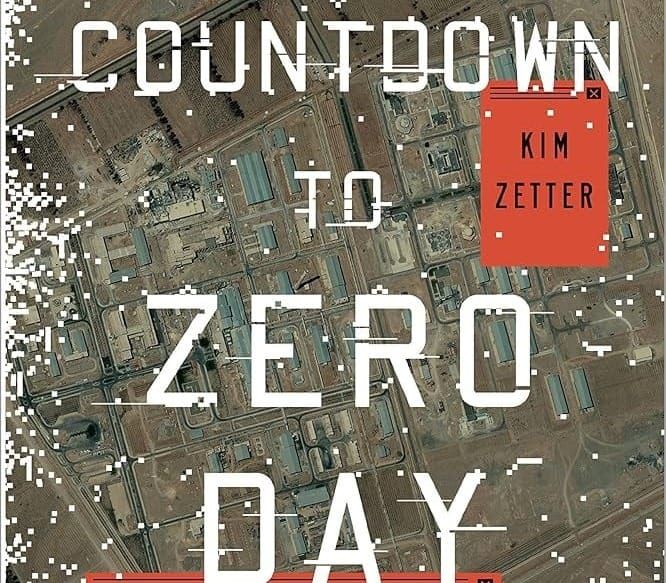
I recently finished Countdown to Zero Day: Stuxnet and the Launch of the World's First Digital Weapon, written by Kim Zetter and published in 2015, which details the discovery by cybersecurity researchers of Stuxnet, the cyber weapon deployed in 2009 and 2010 against Iran’s nuclear program. Despite having been published 10+ years ago, about an event that occurred 15+ years ago (which feels like one hundred in cyber years), the story is perhaps more pertinent now, in 2026 during both an armed conflict between the US and Iran presumably over Iran’s nuclear program and when new AI technology threatens to disrupt the shadowy market for zero day exploits, than it ever has been.
For my thoughts on the long-term impacts of Stuxnet, there are a few key takeaways from the timeline itself that I think are most important:
- Elements of Stuxnet were developed as early as 2005 and it was made up of components developed by multiple teams over the course of a few years.
- Multiple iterations of Stuxnet were developed, with multiple zero day exploits leveraged, mostly to help with infecting target machines, propagating, and remaining undetected.
- Stuxnet was discovered largely in part due to the mechanisms utilized to help it spread, which caused it to propagate to thousands of machines globally, even though its payload was designed only to impact a very specific type of machine that was used to manage the specific types of operational equipment inside the targeted Iranian facility.
- The operation behind Stuxnet, referred to as “Olympic Games”, originated with the Bush Administration and continued under the Obama Administration, was widely viewed as a means to achieving certain outcomes without the need to rely upon kinetic operations, namely, disrupting uranium enrichment at the Natanz nuclear facility in Iran.
Now, reading Zetter's meticulous account of this weapon in 2026, the lessons feel simultaneously more urgent and more melancholy. I break these lessons down in a few ways below.
The Time Needed to Develop Cyber Weapons
In movies and television, a hacker sits down, cracks a few keystrokes, and a power grid goes dark. The details of Stuxnet tell a radically different story.
Development took years, required physical replicas of the target, multi-agency coordination, and deep inside knowledge to know the specific types of equipment going into Natanz, including the specific Siemens PLC model numbers, frequency converter manufacturers, and specific cascade configurations.
Even with all of that, the weapon still escaped its intended target. When a second version of Stuxnet was updated with more aggressive spreading mechanisms it propagated wildly out of control, infecting over 200,000 machines across dozens of countries and ultimately leading to its discovery.
This should inform any serious discussion of offensive cyber operations. What's presented as a precision instrument is, in practice, an extraordinarily complex artifact with unpredictable interaction effects. The development of Stuxnet took multiyear collaboration between the most sophisticated intelligence agencies on the planet, and the weapon still wasn't titrated correctly.
In more recent case studies, cyber has been used to support kinetic actions between Russia and Ukraine. These operations are based on years of poking and prodding adversarial networks, including initial ambiguous objectives (i.e., we don’t know if we’ll ever need to maintain persistent access to that municipality, but it could come in handy some day).
The Zero-Day Game of Cyber Weapons
When the US revealed it possessed bunker-busting bombs capable of penetrating hardened underground facilities, that revelation did not meaningfully diminish future usability. The physics of the weapon persist. The manufacturing capacity persists. The weapon can be rebuilt and redeployed. Only building deeper underground fortresses would reduce the impact of a bunker buster bomb.
Cyber weapons operate under fundamentally different logic. The effectiveness of a zero-day exploit is almost entirely dependent on its secrecy. The moment Stuxnet's four zero-days were exposed to the public, the clock started ticking toward their neutralization. Vendors patched the Windows vulnerabilities. The Siemens PLC fingerprints became known to every ICS security team on the planet. The weapon's core mechanisms became useless.
This creates a strategic calculus that has no real analog in kinetic weapons doctrine. Zero days depreciate at a far greater speed once public than a traditional kinetic ordinance. Further, through research and reverse-engineering, an adversary can turn a cyber tool back on its creator far more easily than reconstructing an F-35 that it saw flying overhead.
This also creates a disclosure dilemma embedded in the zero-day economy that governments have never adequately resolved. Should Microsoft and Siemens have been notified immediately upon the intelligence community’s discovery of the noted zero-days? Would US citizens ultimately be safer with platform providers patching these vulnerabilities rather than an intelligence agency keeping them secret? Bear in mind, an intelligence agency’s knowledge of a particular exploit does not mean that a foreign adversary cannot also be aware of the same exploit.
Stuxnet's exposure forced this question into the open, accelerating debates around responsible disclosure and the concept of a "Vulnerability Equities Process." That debate remains unresolved, and it has become substantially more complicated in the age of AI-assisted vulnerability discovery, which threatens to compress the timeline between a zero-day's discovery and its weaponization.
Was Stuxnet a Strategic Win?
Stuxnet was a revolutionary cyber weapon. But the assessment of Stuxnet’s strategic effectiveness is far more ambivalent.
Stuxnet reportedly destroyed almost 1,000 uranium enrichment centrifuges, representing roughly 20% of Iran's enrichment capacity at Natanz, and operated undetected for nearly three years. It also produced a lasting psychological effect in which engineers could no longer trust equipment failure as coincidence.
More importantly perhaps, there is a plausible argument that the cumulative pressure of sabotage, including with Stuxnet, combined with economic sanctions, contributed to Iran's eventual agreement to the Joint Comprehensive Plan of Action in 2015 (the Iran Nuclear Deal).
But what about the strategic costs?
It should be noted that the US has since pulled out of the Iran Nuclear Deal, and the current military action in Iran has, at times, had the stated goal of eliminating Iran’s nuclear capabilities.
Further, the direct impact of Stuxnet compared to the overall shift in the norms of cyberspace may be difficult to swallow.
Stuxnet, at most, delayed Iran’s nuclear program by a few years. At the same time, Stuxnet was a live demonstration to the world that critical infrastructure could be destroyed through cyber means, the proliferation of Stuxnet to machines around the world meant that the weapon's techniques were effectively open-source.
Perhaps, if Stuxnet had never been discovered and never made public, this cost-benefit analysis would be quite different. But the worldwide spread of Stuxnet demonstrated how quickly an operational decision could backfire.
CISA and the Current Offense-Defense Gap
Kim Zetter's 2025 Congressional testimony, delivered at a hearing titled "Stuxnet 15 Years Later and the Evolution of Cyber Threats to Critical Infrastructure" specifically noted that many of the vulnerabilities that made critical infrastructure susceptible to Stuxnet in 2010 remain unaddressed today.
Since Stuxnet, we have seen cyber operations severely disrupt critical infrastructure within the US, with the Colonial Pipeline and Change Healthcare attacks serving as clear examples.
In 2026, we have seen the very government agency created to work in partnership with the private sector in securing our critical infrastructure, CISA, lose critical funding towards programs that have a direct impact on the cybersecurity of those critical infrastructure providers.
The administration's stated rationale is to "reorient the agency on its central mission of defending networks and critical infrastructure, doing so by eliminating weaponization and waste." The operative tension in that framing is that many of the eliminated programs were the mechanism for defending critical infrastructure.
This creates a troubling asymmetry. The administration's 2026 National Cyber Strategy simultaneously embraces a more aggressive offensive posture, referred to as "defend forward," while cutting the domestic defense infrastructure that would need to absorb retaliatory cyberattacks.
During a period of heightened geopolitical instability, investment and coordination towards defensive capabilities, not only offensive operations, is crucial for ensuring that private sector networks do not become collateral damage.
From Stuxnet to Kinetic Operations
The most profound lesson Countdown to Zero Day offers in 2026 is not about malware architecture or zero-day economics. It is about the relationship between tools and strategy.
Stuxnet was deployed, at least in part, to prevent Iran's nuclear program from advancing without triggering a military conflict. The weapon was explicitly designed as a diplomatic instrument, buying time for negotiations and applying covert pressure without providing Iran a pretext to respond to a declared act of war.
That logic worked, at least partially. Iran came to the negotiating table. The JCPOA was signed in 2015. International inspectors gained unprecedented access to Iranian nuclear facilities. The estimated time Iran would need to develop a nuclear weapon was extended significantly.
Just three years later, the US withdrew from the JCPOA. Iran responded by incrementally exceeding JCPOA limits on enrichment.
The kinetic strikes, which have targeted the Natanz, Fordow, and Isfahan nuclear facilities, among other facilities, have essentially pushed Iran’s nuclear development back to where it may have been if the JCPOA had remained in place.
What this arc reveals is that cyber operations are one of many tools of statecraft, and are only as effective as the strategic planning and patience of the state wielding them. Stuxnet was designed to be used by an administration that preferred diplomacy to war, and that preferred covert action to attributable engagement. That operational context is what made it potentially effective. When the strategic context changed, not only did the weapon become irrelevant, but its partial success was effectively reversed.
What does this say about the strategic reliability of cyber weapons as instruments of national policy? That they may be highly effective within a narrow political window, but that window can close without retaining that residual deterrent value.
Final Take
Reading Countdown to Zero Day in 2026 shows that many of Zetter’s warnings have proven exactly right. The book's central insight, that the US opened a domain of warfare while simultaneously under-investing in its own defensive infrastructure within that domain appears more and more like a description of our current reality.
Countdown to Zero Day is a fantastic and detailed story of the extraordinary technical and organizational achievement of designing a weapon that operated inside enemy infrastructure for three years without detection.
What makes the book essential reading in 2026 however, is the context. Stuxnet was deployed at a specific moment in US-Iranian relations, by an administration committed to diplomatic resolution, in service of a strategy that required time and space to work. That context no longer exists. The enrichment facilities that Stuxnet sabotaged have been bombed with conventional munitions. The nuclear deal that Stuxnet may have helped produce has been abandoned.
Where will policy go next? What will drive the next major decisions in the US-Iran relationship? What levers will we pull? What debts will we incur?
One can only hope these decisions are approached with careful, nuanced judgement.