Cyber Leader's Blueprint 3 - Turbocharge Technical Acumen through Operational Excellence
Operational Excellence encompasses the skillsets that expand your capacity to work and communicate effectively with peers and stakeholders.

Post 3 in my 5-Part thread: The Cybersecurity Leader's Blueprint
In our last post, we explored the foundational technical acumen essential for cybersecurity leaders. Today, we turn our attention to a force multiplier that truly elevates that technical expertise: operational excellence.
Unless you are the world’s foremost expert in a niche technical area, building skills that expand your capacity to work and communicate effectively with peers and stakeholders is critical. I categorize these under Operational Excellence – the habits that, through continuous maturity, enhance your ability to demonstrate and leverage your technical expertise.
This isn't about innate talent; it’s about structured discipline. As James Clear, author of “Atomic Habits,” points out, success isn't just about the goal, but the habits that get you there.
What does this mean in practice?
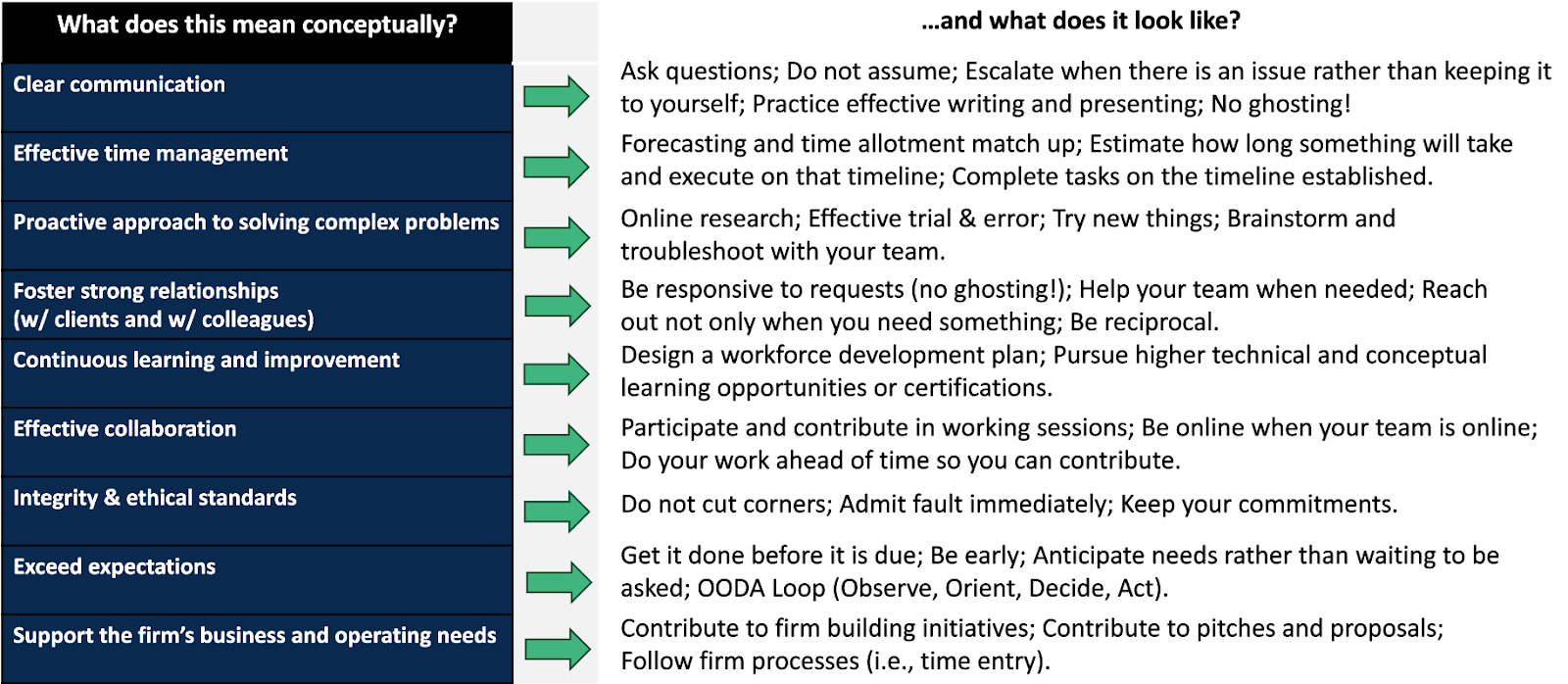
The best part? None of this requires a technical background or education. Leaning on your ability to communicate with the business and organize around initiatives can help make up for a gap in technical expertise. And if you come from a technical-focused background, adding in these components will turbocharge your ability to get organizational buy-in to your efforts.
Through establishment of healthy habits, methodical and strategic planning, and effective communication, you can operate as the steady ship in the storm rather than the chaotic squirrel.
Habits for Operational Excellence
James Clear, author of “Atomic Habits”, said that the person who succeeds and the person who fails likely both had the same goal. The goal focuses on the “what” that you are seeking to achieve. However, it’s the establishment of healthy HABITS that are the “how” you make it happen.
This is great advice in both personal and career capacities.
In a personal capacity, I am trying to mature the habit of journaling to manage my own thoughts. I have made this a component of my workout routine, which is already a consistent habit.
At work, the consistency that you will build through a weekly habit of planning your week on Monday mornings, or the habit of organizing a OneNote, SharePoint folder, and task list for your projects (and sticking with it) will almost certainly lead to an increase in efficiency and the amount of projects/initiatives that you actually see to completion.
Planning & Coordination
Building the act of planning into a habit is a management necessity. While it may seem most efficient to dive right in, you are likely to reduce chaos and save yourself from re-work by thinking through dependencies and logistics. Especially if you are relying on a multi-person team or multiple workstreams to execute a project, there needs to be clear guidance, not only as to what the priorities are but how to think through various scenarios.
I will mention it again later on, but Simon Sinek’s “Begin With Why” has stuck with me since I first heard of the concept. Especially if your project is going to require long hours, days, and nights, getting the team’s buy-in as to WHY they must put forth such an effort will go a long way.
Stephen R. Covey’s “The Seven Habits of Highly Effective People” is so far the only management book I have read multiple times. It was required reading by every project manager at one of my former employers, and I have gone back to it a few times since. The habit of beginning with the end in mind has especially stayed with me. You probably should spend some time thinking about what you are actually trying to accomplish to help identify the “how” you will get it done.
Closely related is personal TASK MANAGEMENT. You will not be an effective manager, which is based on delegating multiple tasks simultaneously, without being able to stay on top of your responsibilities through effective task management.
I am not even referring to anything that complex, and I think the most important thing is to implement a task system that works for you. There are a few take-aways from David Allen’s “Getting Things Done” that I continue to adhere to, including the importance of a singular task list, regardless of in what medium it resides. For instance, I rely upon Outlook for my work task list. If I write something down in my notebook (which I carry everywhere), it is not a “task” until I have gotten it into my formal task list in Outlook. I am far more likely to forget about it if it does not get into the formal task list.
You may have read that and thought, great, I’m going to buy Asana, Monday.com, ClickUp, or whichever project management tool you are into most. Yes, these tools are great and I have great experiences with all of them. But the tool itself fails if you have not established the proper habits related to organization and task management.
Effective Communication (& Writing)
Advice I have given to young and gifted staff who were far smarter than I am has been: it doesn’t matter how right you are if you cannot convey your findings or ideas in a way that can be understood by your stakeholders or in a way that does not make them hate you.
Communicating with your stakeholders, whether you are briefing on the findings of a forensic investigation, making a business case for a new initiative, or explaining to a product manager why you are recommending that they take a different approach, requires having the ability to communicate in terms that the other side can understand and in concise enough terms that their eyes do not glaze over or roll into the backs of their heads. And if your report has typos? Forget about trying to win that expert witness matter.
Regarding writing, I find it worth it to take periodic courses through LinkedIn Learning or Coursera. I also found that Google’s Technical Writing Course for Developers is incredibly helpful for how quickly you can get through it. Identifying and removing passive voice statements was drilled into me early on. (Did you recognize that sentence written in a passive voice?)
Regarding speaking and presenting, this is something that I think simply comes with practice and experience. You may never become fully comfortable with speaking in front of others, but you don’t want your first time to be during the most important meeting of your career.
One More Thing
Technical or not, I cannot understate how valuable someone can make themselves by developing expertise in Microsoft Word, Excel, and PowerPoint (or Google Docs, Sheets, and Slides). Entry-level staff ask me all the time what they can do to make themselves stand out, and usually ask about getting their CISSP. My consistent answer is to master Microsoft Office first, because they’ll be indispensable to any team or project.
Regarding Word, yes, make the report factually correct and comprehensive. But also format it beautifully with section headers, proper page headers and footers, footnotes, and visuals.
Regarding Excel, who doesn’t want someone on their team that everyone else believes is a magician? Whether through mastery of advanced formulas to parse data like no other, or various visualization tools to help make sense of that data, make Excel your best friend.
Regarding PowerPoint, it is easy to joke about the value of slide decks (I am a consultant, I get it!), but the ability to present complex ideas in simply digestible forms can be the difference between an executive choosing to green-light your initiative and being stuck with legacy hardware.